Survivor-centered perspective
A journey through the criminalized work
of Manuela Calvo

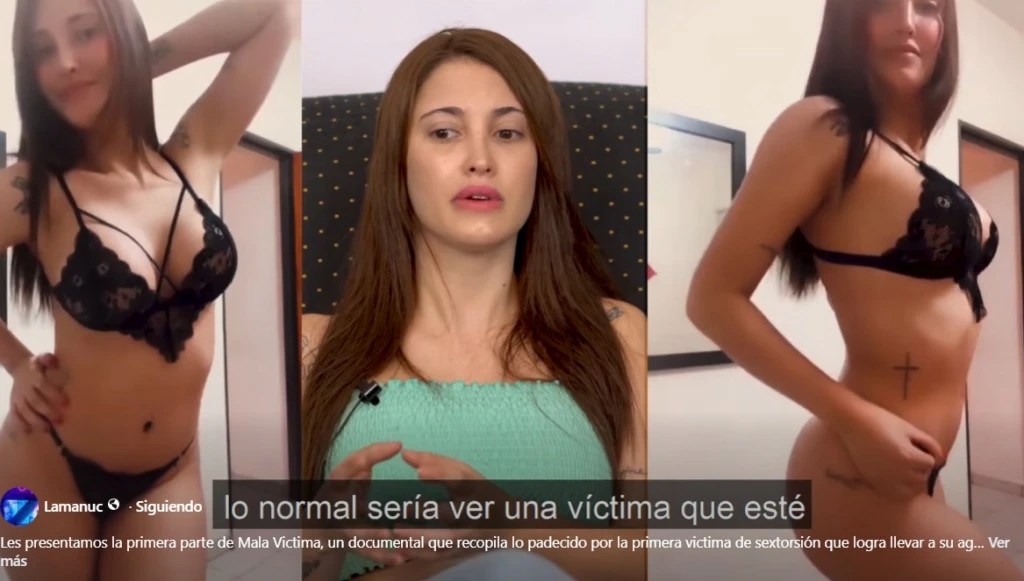
Mala Victima (Bad Victim)
This documentary, released in April 2021 just days before the public trial against Patricio Pioli for the non-consensual dissemination of intimate material involving Paula Sánchez Frega, is an early example of audiovisual storytelling developed from a survivor-centered perspective in Argentina.
The film reconstructs years of media and symbolic violence against the victim, who was publicly discredited by her aggressor and his legal defense. Through a critical narrative approach, it exposes how media coverage and public discourse contributed to revictimization, reinforcing harmful stereotypes and undermining the credibility of survivors of gender-based violence.
The defense of Pioli was led by Juan Carlos Pagotto, who has a public trajectory as a defense lawyer in high-profile human rights cases. During the trial, he dismissed the documentary as part of an alleged “trial by media” driven by feminist movements, framing his client as a victim of premature condemnation.
However, Pioli was ultimately convicted and sentenced to five years in prison, confirming the judicial recognition of the crimes addressed in the film. Despite this, the case continues to be publicly referenced in political discourse as an example of “false accusations,” illustrating how narratives of backlash can persist even in the presence of judicial evidence.
By documenting these tensions, the film reveals how legal, media, and political systems interact to shape public perception, often obscuring the structural nature of violence and the experiences of survivors. It also lays the groundwork for developing ethical and narrative tools that center survivors’ voices while challenging systems that sustain impunity.

Sin voz (Without a Voice)
Without a Voice (Sin voz) is an animated short film that uses fiction to explore the emotional experience of children subjected to forced reunification processes. Through a symbolic and narrative approach, the film seeks to connect with what these children may feel when their voices are dismissed or overridden within institutional frameworks.
Rather than depicting a specific case, the project constructs a fictional story that reflects broader patterns of silence, vulnerability, and lack of agency experienced by children in such contexts.
The film was censored through a judicial measure following a complaint filed by the father involved in the case publicly known as “Arcoíris,” who claimed that the fictional narrative represented his daughter’s story. As a result, the dissemination of the short was restricted despite its fictional nature.
This situation highlights the tensions between creative expression and legal constraints, as well as the challenges of addressing sensitive issues involving children through artistic mediums. Without a Voice thus stands not only as an artistic project, but also as an example of the limitations imposed on efforts to give visibility to experiences that often remain unheard.
.webp)
Mala Madre (Bad Mother)
Mala Madre (Bad Mother) is the second documentary in a body of work developed through a survivor-centered methodology that contrasts media and symbolic violence with the lived experiences of those directly affected. Building on a case already widely exposed in the media, the film seeks to critically examine how public narratives are constructed, often reinforcing stigmatization and silencing key voices. In response, the project intentionally centers those who are systematically marginalized or rendered invisible in mainstream coverage, particularly caregivers and family members who navigate complex judicial processes while protecting survivors. By juxtaposing dominant media representations with first-person perspectives, the documentary aims to reveal the gaps between public discourse and lived reality, highlighting how media narratives can shape, distort, or obscure the understanding of violence. Through this approach, Mala Madre deepens an ongoing exploration of how storytelling can challenge invisibilization and contribute to more ethical, survivor-centered ways of representing conflict, justice, and care.
This documentary project developed from a survivor-centered perspective, focusing on the experiences, reflections, and emotional landscape of the mother and grandmother in the case publicly known as “Arcoíris”, a pseudonym adopted by the maternal family to protect the identity of a minor survivor of intrafamilial sexual abuse. The film examines the tension between private experiences of violence and their public framing, particularly in a context where the child’s identity was exposed by her father, who positioned himself as a victim of alleged parental obstruction. This narrative sought to discredit the accounts of abuse reported by the child since early childhood, reframing them within claims of false accusation. Through intimate testimonies and critical analysis, the documentary explores how legal disputes, media narratives, and social perceptions can converge to obscure the voices of survivors and those who protect them. It highlights the emotional and ethical complexities faced by caregivers navigating institutional processes while attempting to safeguard a child’s rights and dignity. The production of the film was ultimately interrupted in 2022 by a judicial measure that prohibited its dissemination before completion. As a result, Mala Madre remains an unfinished work, standing as both a creative project and a testament to the constraints imposed on efforts to make visible sensitive and contested realities.
La Batalla (The Battle)
La Batalla (The Battle) is a documentary project that follows the case of Sofía Batalla, who publicly denounced sexual violence involving a public official. Following her complaint, she faced not only the challenges of the judicial process but also forms of institutional and political backlash. The project examines how her testimony was contested and discredited through media narratives promoted within the political environment surrounding the accused, framing her allegations as false despite her formal statements before the justice system. The documentary began production in a context marked by judicial persecution against Manuela Calvo, which significantly affected its development. As a result, only selected fragments of the film were publicly released, while the full project remains unfinished. Additionally, due to the severe emotional impact of sustained revictimization, the survivor left the country in order to protect her mental health. This interruption underscores the broader conditions the film seeks to expose: the personal and collective costs of confronting power, and the ways in which institutional and social pressures can silence or displace those who speak out.
Through a survivor-centered approach, La Batalla aims to reveal how violence extends beyond individual acts, operating through interconnected legal, political, and media systems that shape visibility, credibility, and the possibility of justice.
Bala Expandida (Expanding Bullet)
Bala Expandida (Expanding Bullet) is a documentary project that investigates the asymmetries of visibility in media coverage of violent crimes. The film focuses on a 2019 case in which a man was shot with an expanding bullet, survived, and was left with a permanent disability.
Media narratives around the case extensively exposed the victim and his demands for justice, while systematically omitting the identity and image of the perpetrator, who remains publicly unidentified in coverage and has not been brought to trial. This imbalance reveals how visibility can be selectively constructed, shaping public perception and accountability.
The project seeks to critically examine how media practices can reinforce inequality by overexposing victims while protecting or obscuring perpetrators, contributing to a broader culture of impunity.
During its production in 2022, the documentary was suspended following a legal intimidation directed at Manuela Calvo by the alleged perpetrator, who remained armed and unprosecuted at the time. This occurred within a broader context of legal harassment (SLAPP), illustrating how threats and legal pressure can restrict journalistic work and prevent the documentation of sensitive cases.
As an unfinished project, Bala Expandida highlights not only the violence it set out to document, but also the conditions that hinder the possibility of making such violence visible.
Mala denunciante (False Accuser)
The “False Accuser” (Mala denunciante) is an ongoing documentary project developed within Pares Lab, an initiative founded in 2023 following a sustained process of legal harassment (SLAPP) that interrupted several previous documentary productions. From this point forward, the work shifted from independent journalism to a collective, human rights–based approach, focused on amplifying the voices of those affected by structural inequalities.
The project centers on the case of a mother who, after seeking legal enforcement of child support obligations established by court order, was brought to trial and criminally charged with false accusation. Despite the father’s continued failure to comply with his financial responsibilities, he succeeded in initiating criminal proceedings against the mother, who had been solely responsible for raising their child. Although she was ultimately acquitted, the case remains ongoing, revealing a persistent inversion of roles in which those who demand rights are turned into defendants.
During the public trial, our reporting tools were confiscated, and we were prevented from documenting the hearings, despite being the only members of the press present. This restriction highlights the barriers faced when attempting to make visible sensitive judicial processes.
Nevertheless, we have continued developing this project, as we consider it a critical example of the challenges faced by single mothers without resources when seeking legal enforcement of basic rights. The case illustrates how pursuing accountability can lead not only to institutional resistance, but also to punitive responses, exposing the risks and limitations of relying on legal systems that may fail to protect those they are meant to serve.